Dead Time, Alive Work: Why Scheduled Silence Between Takes Is the Secret Weapon of High-Output Studios
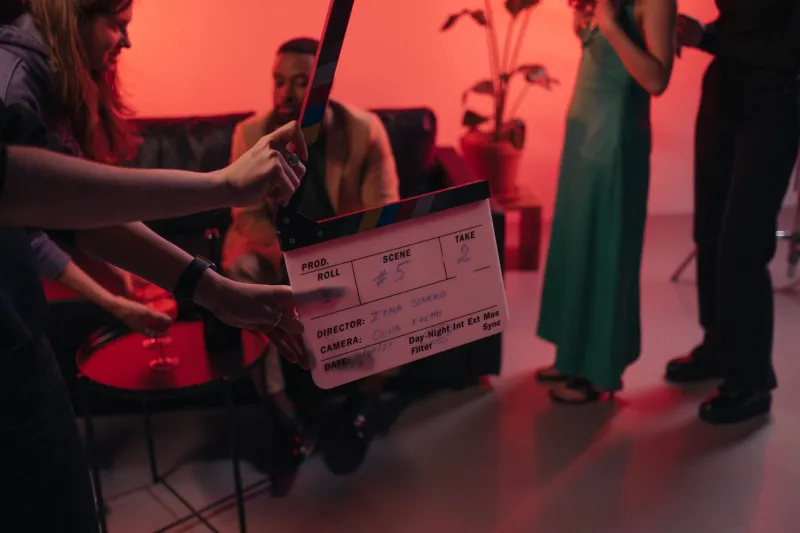
There is a persistent myth in professional production circles that a great shoot is a relentless one. The camera rolls, the crew hustles, the director calls action with barely a breath between setups, and at the end of twelve hours, the drive is full and the job is done. Efficiency, by this definition, means eliminating every gap.
But the studios producing the most distinguished work right now are operating by a different logic entirely. They are building pauses into their production schedules on purpose—not as accidents or failures of planning, but as deliberate creative instruments. And the outcomes are challenging everything the industry thought it understood about pace, output, and quality.
The Misconception at the Heart of the Production Day
When clients commission a shoot—whether it is a commercial campaign, a brand documentary, or a product photography series—they are paying for time. That reality creates understandable pressure. Every idle moment can feel like money evaporating. Project managers track setups per hour. Producers count deliverables against clock time. The cultural default is motion.
What this framework misses is the distinction between activity and output. A crew in constant motion is not necessarily a crew producing better material. Fatigue accumulates invisibly. Cinematographers lose their sensitivity to subtle light shifts when they have been grinding through setups for four consecutive hours. Directors become reactive rather than observational, calling for action before they have fully absorbed what the environment is offering them.
The pause, properly understood, is not the absence of production. It is production of a different kind.
What Happens in the Gaps
Studios that have formalized intentional downtime into their workflows describe a consistent set of phenomena during those intervals.
First, light changes—and those changes become visible. Natural light is never static, and even interior environments with controlled artificial lighting shift in response to crew movement, temperature, and the gradual warming or cooling of fixtures. A cinematographer who steps away from the eyepiece for fifteen minutes and then returns to the frame sees it differently. Details that had become invisible through familiarity reassert themselves. A shadow that was acceptable becomes interesting. An angle that seemed settled suddenly suggests an alternative.
Second, crew energy resets. This is not a soft, anecdotal observation. Production teams that work in sustained sprints without recovery intervals make more errors in the back half of a shoot day than in the front half. Lighting rigs get set imprecisely. Audio levels drift. The cumulative cost of those errors—in reshoots, in post-production correction time, in missed opportunities—frequently exceeds whatever was theoretically saved by eliminating the break.
Third, and perhaps most significantly, spontaneous moments emerge. The most memorable frames in any body of studio work almost never come from the meticulously planned take. They come from the moment between takes, when a subject relaxes, when the light does something unexpected, when a crew member says something that makes the talent laugh genuinely for the first time all day. Scheduled stillness creates the conditions in which those moments have room to breathe.
How Leading Studios Are Structuring the Pause
The implementation varies, but the underlying architecture is consistent across studios that have embraced this philosophy.
Some build what they call observation windows—fifteen-to-twenty-minute intervals after every major setup change, during which the camera is locked off, the crew steps back, and the director simply watches the environment. No adjustments. No conversation about the next shot. Just looking. Directors who practice this discipline report that it fundamentally changes their relationship to the space they are working in.
Others schedule energy audits at the midpoint of a shoot day. A brief, structured pause in which the director and director of photography separately review what has been captured, compare notes, and identify whether the work so far reflects the original creative intent or whether the pace of the morning has pulled the project in a direction that requires recalibration.
Still others use gaps between setups to conduct what some call passive casting—observing subjects or talent in unguided moments to identify behavioral patterns, expressions, or gestures that can then be invited rather than directed in subsequent takes. The difference in authenticity between a directed expression and one that has been observed and gently encouraged is visible on screen, even to untrained eyes.
The Measurable Impact on Final Output
Quantifying creative quality is notoriously difficult, but several indicators are worth examining.
Studios that have adopted structured pause protocols consistently report reductions in post-production correction time. When cinematographers are rested and observant, technical execution improves. Exposure decisions are more precise. Focus is more reliable. Color temperature choices are more intentional. The footage that arrives in the edit is cleaner, which compresses the post-production timeline and reduces cost.
Client revision rates also decline. This is partly a technical phenomenon, but it is also a perceptual one. Work produced by a crew operating at full cognitive capacity tends to feel more coherent, more considered, and more aligned with the original brief. Clients respond to that coherence even when they cannot articulate precisely what they are responding to.
Team morale, harder to measure but consequential over time, improves meaningfully. Crews that work on productions with structured recovery intervals report higher job satisfaction and lower burnout rates. In an industry where experienced talent is both scarce and expensive, retention is a genuine competitive advantage.
The Client Conversation
Introducing this philosophy to clients who are accustomed to the relentless-pace model requires a specific kind of communication. The framing matters.
The most effective approach is not to present the pause as a luxury or a concession to crew comfort. It is to present it as a production methodology with documented outcomes—one that delivers higher-quality material with fewer revisions and greater consistency across the deliverable set. When framed in those terms, the conversation shifts from why are we stopping to what are we gaining.
At Goyal's Studio, the integration of intentional stillness into production scheduling reflects a broader conviction: that the quality of what appears in the final frame is inseparable from the quality of the conditions in which it was captured. A frame made in haste carries that haste within it, whether or not the viewer can identify its source.
Rethinking the Rhythm of the Production Day
The studios that will define the next decade of professional visual work are not necessarily the fastest or the most technically equipped. They are the ones that understand the relationship between pace and perception—that know when to accelerate and when to hold, when to press for the next setup and when to let the environment speak.
Scheduled silence is not dead time. It is the interval in which the best work finds its form. The frame that endures is rarely the one captured in the rush. It is the one that waited for the right moment to arrive—and was made by a team with the clarity to recognize it when it did.