Handmade by Design: How Elite Studios Are Turning Human Craft Into Their Most Powerful Market Differentiator
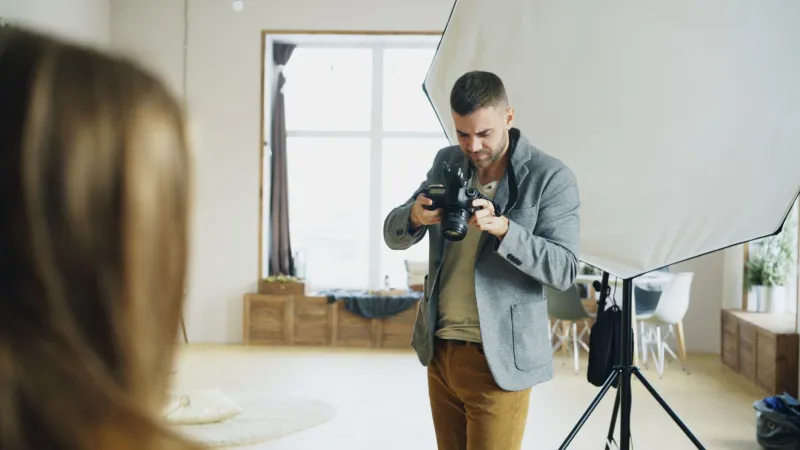
There is a quiet revolution happening inside some of the most respected creative studios in the United States. It does not involve new camera technology, proprietary editing software, or breakthrough lighting rigs. It involves a decision — a deliberate, sometimes uncomfortable, and commercially courageous choice to say no.
No to AI-generated imagery. No to automated compositing pipelines. No to synthetic content that mimics the look of human craft without the substance behind it.
For studios that have built their reputations on authentic visual storytelling, this refusal is not simply a philosophical stance. It is a positioning strategy — one that is attracting precisely the kind of clients who understand the difference between a frame that was composed and a frame that was computed.
The Market Condition That Created the Opportunity
The rapid commoditization of AI-generated visuals has done something unexpected to the creative economy: it has created a scarcity of genuine human authorship. When any brand can produce polished-looking imagery at scale for a fraction of traditional production costs, the visual landscape becomes saturated with content that is technically proficient but experientially hollow.
Clients who operate at the higher end of the market — those building long-term brand equity rather than filling content calendars — have begun to notice. They are not simply buying photographs or video. They are buying the story of how those assets came to exist. They are buying the judgment of a trained eye, the physical presence of a skilled crew, the iterative decision-making that happens between a director and a subject in real time. None of that can be replicated by a model trained on aggregated visual data.
Studios that recognize this shift are not waiting for clients to ask. They are leading with the declaration.
Resistance as a Brand Statement
Some studios have begun incorporating their commitment to human-made work directly into their client-facing materials — not buried in an FAQ section, but prominently featured as a core value proposition. The language is intentional: every frame is human-authored, no generative tools in our pipeline, crafted, not computed.
This kind of transparency serves a dual function. First, it filters the inquiry pool. A prospective client whose primary concern is cost efficiency will self-select out of the conversation before the first discovery call. Second, it signals sophistication to the clients who remain. Brands that have invested years in building authentic visual identities understand intuitively why this distinction matters. They are not looking for the cheapest path to content. They are looking for a creative partner whose standards align with their own.
At Goyal's Studio, the belief has always been that where vision meets the frame, something irreducibly human must be present. A generated image carries no memory of the light in the room, no awareness of what the subject was thinking, no understanding of why one angle serves the narrative better than another. These are not abstract qualities. They are the invisible architecture that separates commercial imagery from commercial art.
The Business Case Is Stronger Than It Appears
Skeptics of this approach often raise a straightforward objection: studios that reject AI-assisted workflows are leaving efficiency on the table. The counterargument, increasingly supported by the behavior of high-value clients, is that efficiency is not the metric that matters most at the premium tier.
Consider what a brand-level photography or video production budget actually represents. It is not a line item to be minimized. It is an investment in the visual identity of an organization — one that will be deployed across campaigns, platforms, and audiences for months or years. The return on that investment is not measured in cost-per-image. It is measured in audience response, brand recall, and the cumulative credibility that authentic visual work builds over time.
Studios that position themselves as guardians of that standard — who can articulate clearly why human craft produces superior outcomes at this level — are not competing on price. They are competing on trust. And trust, in the creative services market, commands a significant premium.
What Clients Are Actually Buying
There is a psychological dimension to this conversation that deserves direct attention. When a client commissions original photography or video from a studio that has publicly committed to human-made work, they are purchasing something beyond the deliverable itself. They are purchasing the assurance that their brand's visual identity was not assembled from statistical averages of existing imagery.
For industries where authenticity is a core brand value — food and beverage, lifestyle, healthcare, luxury goods, professional services — this distinction is not trivial. Audiences are becoming increasingly attuned to the difference between imagery that feels inhabited and imagery that feels generated. The uncanny valley of AI content is real, and it registers emotionally even when it cannot be articulated intellectually.
Studios that make their human authorship explicit give clients a story to tell. This campaign was shot on location. This portrait was lit by a cinematographer who spent three hours understanding the subject before touching the camera. These are narratives that build brand equity in ways that generated content structurally cannot.
Craft as Competitive Moat
Perhaps the most durable advantage of this positioning is that it cannot be easily replicated by studios that have already committed to AI-integrated workflows. Once a studio has built its operational model around automated content generation, the pivot back to full human authorship carries real costs — in time, in retraining, in the loss of whatever efficiency gains the AI pipeline produced.
Studios that have held the line on human craft, by contrast, have been deepening that expertise throughout the same period. Their photographers are more experienced. Their directors have accumulated more reps. Their understanding of what makes a frame emotionally resonant has grown more refined precisely because they have been forced to solve every creative problem with human intelligence rather than delegating it to a generative system.
That compounding expertise is not just a philosophical asset. It is a structural competitive advantage that grows more significant as the AI-generated content market becomes more crowded and more indistinguishable from itself.
The Studios That Will Define the Next Decade
The creative industry is undergoing a sorting process. On one side, studios optimizing for volume, speed, and cost reduction through automation. On the other, studios doubling down on the irreplaceable value of human vision, human presence, and human authorship.
Both models will find their markets. But the studios that will define the next decade of premium creative work — the ones whose names appear on the most significant brand campaigns, the ones whose portfolios are studied and emulated — will almost certainly be found in the second group.
Not because they rejected technology out of fear. But because they understood, with clarity and conviction, that the most powerful thing a studio can offer is something no machine has yet learned to manufacture: the unmistakable evidence that a human being cared deeply about every single frame.