The Unscripted Advantage: Why Showing Your Studio's Process Is the Most Powerful Brand Story You Can Tell

Photo: Don Le, CC BY 2.0, via Wikimedia Commons
There is a particular irony at the center of modern creative marketing. Studios spend considerable resources crafting visually immaculate portfolios — perfectly lit images, precisely edited reels, and testimonials curated for maximum persuasion. And yet, increasingly, the content that stops a potential client mid-scroll is not the finished product. It is a shaky behind-the-scenes clip of a photographer adjusting a reflector, a time-lapse of a set being built, or a candid team moment captured between takes.
This is not a coincidence. It is a signal — and the studios paying attention to it are building something far more durable than an impressive portfolio. They are building communities.
Why Audiences Have Grown Skeptical of Perfection
American consumers have become remarkably sophisticated in their ability to detect inauthenticity. Years of exposure to highly polished advertising, influencer culture, and brand-managed social media have cultivated a collective skepticism toward content that appears too pristine. When everything looks perfect, nothing feels real.
This cultural shift has been documented extensively. Edelman's Trust Barometer has consistently found that consumers in the United States place significantly higher trust in content that feels genuine and human over content that feels produced and promotional. For creative studios, whose entire business model is built on producing polished content for others, this creates a fascinating paradox: the very skills that define your professional output may be working against your own brand marketing.
The resolution to that paradox is behind-the-scenes content — raw, process-driven material that invites audiences inside the studio's world before the polish is applied.
What Behind-the-Scenes Content Actually Encompasses
The term "behind-the-scenes" is broader than it might initially appear, and understanding its full range is important for studios looking to deploy it strategically.
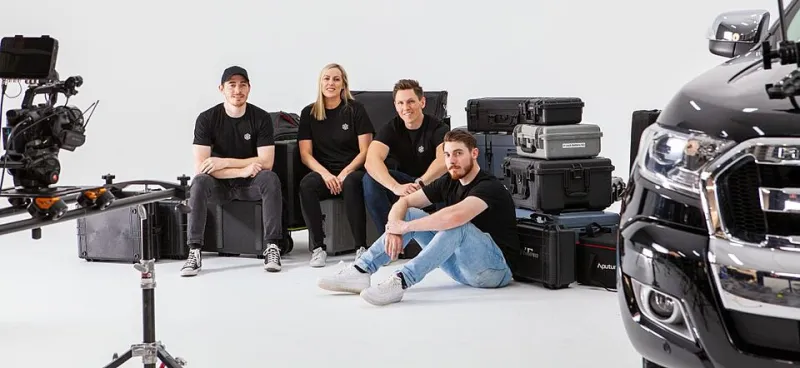
At its most immediate, BTS content includes footage captured on set during active production: a videographer adjusting a gimbal, a photographer coaching a subject through a pose, a creative director marking up a storyboard. This category of content is perhaps the most accessible because it requires minimal additional effort — the work is already happening, and capturing it is a matter of intention rather than production.
Beyond the shoot itself, BTS content encompasses studio walkthroughs that reveal the physical environment where creative work happens. It includes gear breakdowns and equipment discussions that speak directly to technically curious audiences. It encompasses failed takes and honest reflections on what did not work and why. It includes team introductions, creative disagreements, and the quiet, unglamorous work of post-production.
Each of these content types serves a distinct purpose, but all of them share a common function: they make the studio legible to an outside audience in a way that a portfolio never can.
The Strategic Logic Behind Process Transparency
Sharing process content is not simply about likability, though likability is a meaningful byproduct. There is a sharper strategic logic operating beneath the surface.
First, process content educates prospective clients about what working with your studio actually involves. A client who has watched a studio's creative brief review process on video arrives at the first project meeting with realistic expectations and a higher baseline of trust. They understand that great photography requires preparation, that lighting setups take time, that revision cycles are part of the work. This education reduces friction throughout the client relationship.
Second, BTS content functions as a form of proof that is distinct from — and arguably more persuasive than — a traditional portfolio. A portfolio shows what a studio has produced. Process content demonstrates how a studio thinks, how it problem-solves, and how it treats the people it works with. For clients making significant investments in creative services, this kind of evidence is deeply reassuring.
Third, and perhaps most importantly for long-term brand building, process content creates the conditions for genuine community. Audiences who follow a studio's creative journey over time develop a relationship with that studio that transcends transactional interest. They become advocates. They share content. They refer clients. They return.
Navigating the Tension Between Transparency and Confidentiality
The most common hesitation studios express about sharing process content is entirely legitimate: what can be shown without compromising client confidentiality or revealing proprietary methods?
This is a tension worth taking seriously, and the answer lies in thoughtful curation rather than blanket restriction. Most clients are not opposed to their projects being referenced in BTS content — particularly when the coverage is flattering and they are consulted in advance. Building a simple client consent process into your standard contract language allows studios to create BTS content freely while maintaining professional trust.
For projects where confidentiality is genuinely required, studios can shift their BTS focus to process elements that are not project-specific: equipment discussions, studio setup demonstrations, creative philosophy conversations, or team culture moments. These categories of content are entirely free of confidentiality concerns and are often just as compelling to audiences.
The key principle is that transparency does not require total disclosure. It requires enough genuine access that audiences feel invited in rather than managed.
Studios That Have Turned Process Into Their Primary Marketing Asset
Across the United States, a growing number of creative studios have restructured their content strategies around behind-the-scenes material — and the results are instructive.
Studios that commit to consistent, platform-appropriate BTS content — short-form video on Instagram and TikTok, longer-form process documentation on YouTube, candid photography shared through newsletters — report meaningful shifts in inbound inquiry quality. Clients who discover a studio through its process content tend to arrive with greater clarity about what they want, deeper alignment with the studio's aesthetic, and a stronger predisposition to trust the studio's creative judgment.
This last point deserves emphasis. When clients have watched a studio navigate creative challenges with competence and honesty, they extend a degree of creative latitude that clients arriving cold through a portfolio rarely do. That latitude is precisely what allows studios to produce their best work.
Building Your Studio's BTS Content Practice
For studios at Goyal's Studio and beyond, beginning or deepening a behind-the-scenes content practice does not require a separate production budget or a dedicated content team. It requires a shift in mindset and a modest investment in habit.
Designate someone on set — or rotate the responsibility — to capture candid moments throughout each production day. Invest in a few minutes of reflection after each project to discuss what worked, what surprised you, and what you learned. These reflections, shared honestly, are among the most engaging content a studio can produce.
Approach your studio space itself as a subject worth documenting. The physical environment where creative work happens tells a story about how a studio operates and what it values. Walk audiences through it with the same care you would bring to any visual project.
And above all, resist the instinct to over-produce your process content. The imperfections are not liabilities — they are the point. In a world of curated perfection, the willingness to be genuinely seen is the most distinctive thing a creative studio can offer.
At Goyal's Studio, we believe the most compelling frame is not always the one that appears in the final deliverable. Sometimes it is the moment just before — when the light is being set, the idea is still forming, and the work is most fully, most honestly alive.