From Fog to Focus: How Great Studios Turn Vague Client Briefs Into Precise Visual Direction

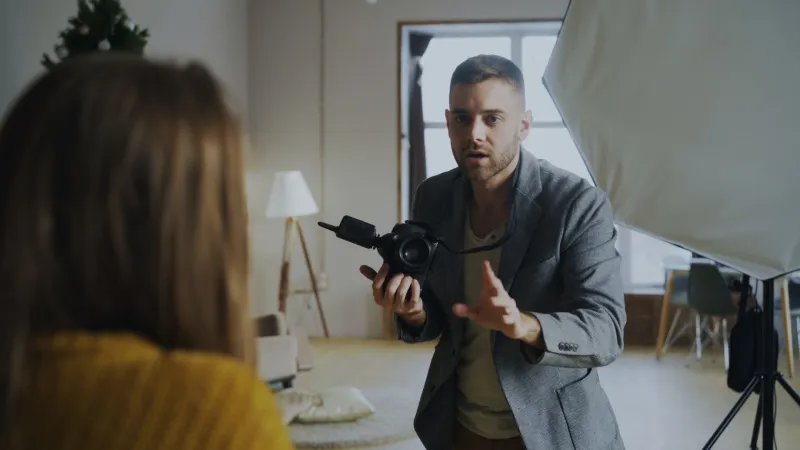
Photo by Photo by Andrew Measham on Unsplash on Unsplash
The Brief That Isn't Really a Brief
It arrives in a variety of forms. Sometimes it is a single paragraph with three competing adjectives that cancel each other out. Sometimes it is a folder of Pinterest boards that span three incompatible aesthetics. Occasionally, it is a forty-five-minute phone call that ends with the client saying, "You know what I mean—just make it feel right."
For studios without a disciplined discovery process, these moments feel like professional quicksand. For studios that have built one, they represent something far more valuable: an open canvas and a client who trusts you enough to admit they don't yet have the answer.
At Goyal's Studio, we have come to understand that the incomplete brief is not a failure of the client. It is, more often, a symptom of something entirely reasonable—a person or organization that knows what they want to achieve but has not yet developed the visual vocabulary to describe how they want it to look. The studio's job is to close that gap, and closing it well requires a specific set of tools.
Why Vague Briefs Are Actually a Strategic Opportunity
There is a temptation, especially early in a studio's development, to fill in the blanks yourself—to make assumptions, proceed on instinct, and present finished work with confidence. This approach occasionally produces brilliant results. Far more frequently, it produces expensive revisions and quietly frustrated clients who struggle to articulate why the final product doesn't feel like theirs.
The more productive instinct is curiosity. When a client cannot describe what they want, they are signaling that they need a guide—someone who can ask the questions that surface the vision they already carry but haven't yet translated into language. That role, executed skillfully, elevates the studio from vendor to creative partner. And creative partners command both higher fees and deeper client loyalty.
The Diagnostic Conversation: Questions That Do Real Work
Not all discovery questions are equal. Questions like "What's your vision?" or "What style are you going for?" tend to generate the same circular language that appeared in the original brief. More productive questions operate at an angle—they approach the client's true intent from a direction they haven't already exhausted.
Some of the most effective diagnostic prompts include:
-
"Tell me about a piece of work you've seen recently that made you feel something—even if it has nothing to do with your industry." This separates aesthetic instinct from category convention and often reveals emotional targets the client hadn't consciously identified.
-
"What does your audience do immediately after they encounter this content?" Anchoring the conversation in desired behavior rather than style often clarifies tone, pacing, and composition more precisely than any mood board.
-
"What would make you uncomfortable about this project?" Boundaries and anxieties are frequently more revealing than aspirations. Understanding what a client fears the work becoming is often the fastest route to understanding what they want it to be.
-
"If this project succeeds completely, how will you know?" This question forces measurable thinking and helps separate personal preference from strategic necessity—a distinction that matters enormously when creative disagreements arise later.
These questions are not a script. They are a posture: genuinely investigative, unhurried, and structured to draw out specificity rather than confirm assumptions.
Running Discovery Sessions That Feel Collaborative, Not Interrogative
Even the best diagnostic questions can feel clinical if the environment surrounding them isn't right. The most effective discovery sessions at professional studios share a few consistent qualities.
They begin with observation, not agenda. Rather than opening with a prepared list of questions, skilled creative directors often begin by asking the client to walk them through whatever reference material they've already assembled—however incomplete. Listening to how a client narrates their own inspiration reveals vocabulary, priorities, and emotional anchors that a formal questionnaire would never surface.
They involve showing, not just asking. Presenting three or four radically different visual directions early in the session—not as proposals, but as stimuli—gives clients something concrete to react to. A client who cannot describe what they want will often tell you, with great precision, what they don't want. That negative space is invaluable.
They end with a synthesis, not a summary. The studio's role at the close of a discovery session is to play back what it heard in its own words—reframing the client's scattered input into a coherent creative direction. This synthesis is not a final decision; it is a mirror. When a client hears their own fragmented ideas reflected back as a clear, purposeful statement of intent, they almost always respond with either affirmation or a targeted correction. Either outcome moves the project forward.
Translating Aspiration Into Visual Language
Once a studio has gathered sufficient diagnostic material, the real craft begins: converting abstract emotional aspiration into concrete visual decisions. This translation process is where experience becomes irreplaceable.
Consider a client who repeatedly uses the word "warm" to describe their desired photography. That word could mean golden-hour outdoor light, a shallow depth of field with earth-toned backgrounds, a color grade that lifts shadows and softens highlights, or simply the presence of human subjects who appear genuinely at ease. Each interpretation produces a different photograph. The studio's job is to determine which interpretation is accurate—and to document that determination in language precise enough to guide every subsequent creative decision.
This documentation, often called a visual brief or creative direction document, is the artifact that transforms discovery into production. It should specify not just aesthetic qualities but the reasons behind them—connecting each visual choice back to the emotional or strategic outcome the client articulated during discovery. When that chain of reasoning is visible, both the studio and the client can evaluate work against something more reliable than personal taste.
The Work That Follows Is Better
Studios that invest seriously in discovery consistently report a counterintuitive outcome: projects that begin with the most ambiguous briefs frequently produce the strongest final work. The reason is structural. When a studio has been forced to excavate a client's true vision rather than accepting a surface-level brief, both parties arrive at production with a shared understanding that is more precise, more personal, and more durable than anything a polished brief document could have provided.
The client who doesn't know what they want is not a problem to be managed. They are an invitation to do what great studios do best—to listen with discipline, ask with intention, and translate human aspiration into images that speak before a single word is read.
That translation is, in the end, what the craft has always been about.