When Perfect Becomes a Problem: Rethinking Studio Craft in the Age of Radical Honesty

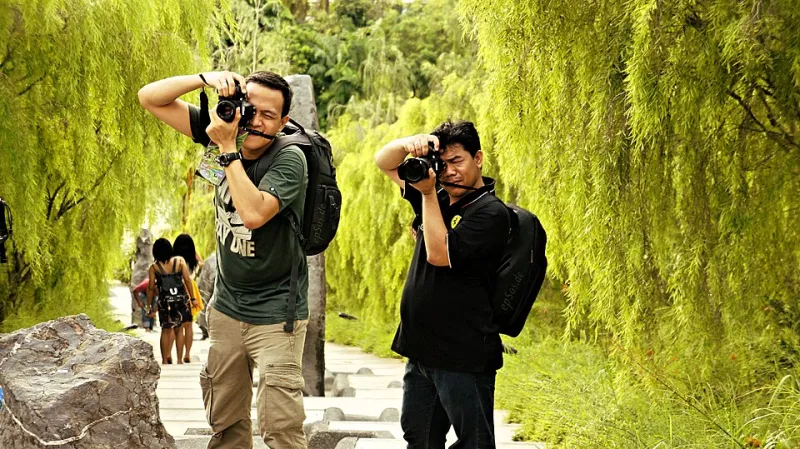
Photo: Lewis Hine, Public domain, via Wikimedia Commons
The Moment Polish Became a Warning Sign
For decades, the benchmark of professional creative work was simple: eliminate every flaw. Retouch the skin. Even the shadows. Grade the footage until it gleams. The implicit message to clients was that perfection equaled professionalism, and professionalism justified premium rates.
That contract between studio and audience has quietly expired.
Something significant shifted in the early 2020s, accelerated by the rise of short-form video platforms and an increasingly media-literate American consumer base. Audiences began to associate hyper-polished commercial content not with quality, but with concealment. When everything looks too good, the subconscious question is no longer how did they do that? — it's what are they hiding?
This is the authenticity paradox creative studios are now navigating: the very technical excellence that once built trust has, in certain contexts, become a liability.
What the Data and the Culture Are Saying
Consider the trajectory of some of the most culturally resonant commercial campaigns of recent years. Dove's long-running Real Beauty initiative — which deliberately moved away from retouched imagery toward unaltered portraiture — didn't just perform well in focus groups. It generated sustained consumer loyalty and became a referenced case study in virtually every major marketing school in the country. The brand's willingness to show real texture, real variance, and real people translated into real revenue.
More recently, brands like Patagonia, Glossier, and even traditionally glossy players like Nike have incorporated raw, handheld, and deliberately lo-fi visual sequences into campaigns that run alongside — or sometimes replace — their high-production counterparts. The results have consistently outperformed audience engagement benchmarks.
This is not an accident. American consumers, particularly those between the ages of 25 and 45, have been conditioned by years of social media to read visual imperfection as a signal of honesty. Grain, natural light, unscripted moments, and visible environment all function as authenticity markers. When those markers are absent, the content registers as constructed — and construction, in this cultural moment, reads as manipulation.
The Studio's Dilemma: Craft Without Contrivance
None of this means that studios should abandon their technical standards or present sloppy work as a philosophical choice. That path leads to a different credibility problem — one that undercuts both the studio's value and the client's investment.
The real challenge is more nuanced: how does a professional creative operation introduce intentional humanity into its work without it looking like a calculated imitation of spontaneity? Manufactured rawness is perhaps the worst outcome — audiences are sophisticated enough to recognize when imperfection has been engineered, and the result is more alienating than either extreme.
The answer lies in a shift of intent rather than a shift of technique. Studios that are succeeding in this environment are not lowering their standards. They are redirecting their craft toward capturing genuine moments rather than constructing ideal ones.
Practical Approaches That Preserve Professional Value
Shoot with intention, edit with restraint. One of the most effective adjustments studios can make is in post-production philosophy. Rather than correcting every variable, consider which imperfections serve the story. A slightly warm color cast in an interview setting can communicate warmth and intimacy. A subtle lens flare in an environmental shot can communicate presence. The question shifts from is this technically correct? to does this feel true?
Build space for unscripted moments. When working with clients on commercial shoots, creating structured breathing room — time in the schedule that isn't tightly storyboarded — often yields the most compelling frames. This requires client trust and clear communication up front, but the resulting content consistently resonates more deeply than its scripted counterparts.
Reconsider your retouching defaults. This applies particularly in commercial photography. The industry standard of aggressive skin retouching is increasingly out of step with where cultural expectations have landed. Presenting clients with a range of retouching intensities — including options that preserve natural texture — opens a conversation about audience perception that many clients haven't had with a studio before. That conversation positions the studio as a strategic partner, not just a technical vendor.
Let the environment participate. Over-controlled studio environments, while technically pristine, often strip content of the contextual richness that makes it feel inhabited. When appropriate, shooting in actual client environments, with real ambient light and genuine spatial character, introduces a layer of authenticity that no amount of set design fully replicates.
Protecting the Value Proposition
The concern studios most frequently raise when this conversation comes up is reasonable: if we're delivering something that looks less polished, how do we justify our rates?
The answer is that the deliverable has changed, not diminished. What the studio is now offering is the skill to distinguish between imperfections that serve a story and those that undermine it — a judgment call that requires deep craft, strong editorial instinct, and genuine understanding of audience psychology. That is, if anything, a more sophisticated service than technical flawlessness alone.
Framing this distinction clearly in client relationships — through discovery conversations, through the language used in proposals, through the work itself — is how studios maintain and even elevate their positioning in a market that has moved on from the perfection premium.
The Frame That Feels Real
At Goyal's Studio, the principle that vision meets the frame has always implied more than technical precision. It implies the discernment to know what belongs in the frame and what should be released. In the current creative climate, that discernment increasingly means allowing the human element — uneven, genuine, and alive — to do what no retouching tool ever could.
The studios that will define the next era of commercial creative work are not those abandoning craft. They are those expanding their definition of it.